
How to Build a Seafood Wine Menu with Long Island Wine 2026
July 29, 2026
Why the wrong wine makes seafood taste flatter than it should
A seafood menu can look perfect on paper and still feel dull at the table. That usually happens when the wine has too much weight, too little acidity, or the wrong texture. If you are trying to build a seafood wine menu and the choices feel overwhelming, that reaction is normal. We hear it often from people planning dinners, raw bars, and small restaurant lists across Commack and Suffolk County. The good news is that the fix is simpler than most people think.
What diners usually miss when they pair fish and wine by instinct alone
Most diners choose by color first: white for fish, red for steak. That rule helps only a little. Seafood changes quickly depending on how it is served, seasoned, and sauced. A delicate fluke crudo needs a different bottle than lobster with butter, and both need something different from miso-glazed salmon. On the projects we’ve finished this year, the biggest mistake has been treating all seafood like one category.
Here is the part most homeowners miss. The side dish often matters as much as the protein. Fries, aioli, lemon butter, soy, chili oil, and herb vinaigrette all change the wine’s job. One client in Huntington built a beautiful shellfish spread with oysters, shrimp, and crab legs, but the first wine was too round and soft. We shifted to brighter bottles, and suddenly the menu tasted cleaner, sharper, and more expensive. That is the real value of Long Island seafood wine pairing guide in 2026.
How acidity, salinity, and texture decide whether a bottle lifts or crushes the dish
Acidity is the backbone of seafood pairing. It keeps the palate awake and cuts through richness. Salinity, meanwhile, pairs beautifully with wines that have a clean mineral edge. Texture matters too, because creamy sauces can make a lean wine feel thin, while a heavy oak style can bury oysters completely. You do not need a sommelier diploma to get this right. You just need a bottle with the right balance.
Think of it this way: crisp coastal wines taste more alive beside briny seafood. A wine with sharp citrus can make lemon-dressed shrimp pop. A wine with too much oak can make the same shrimp seem muted. That is why a white wine for seafood on Long Island often performs better than a broad, buttery style. The bottle should frame the dish, not wrestle it.
Why Long Island wine works so well with oysters, lobster, crab legs, and grilled fish
Long Island wine has a natural fit with seafood because so many local styles lean fresh, bright, and food-friendly. You get that coastal tension in the glass, especially with whites that show citrus, green apple, sea spray, or light stone fruit. Oysters love that kind of lift. Lobster can handle a little more body. Crab legs want clean fruit and a soft finish. Grilled fish usually needs a wine with enough character to stand up to char without overwhelming the flesh.
We see this in real menus all the time. A raw bar in Suffolk County might pour one wine for brine and another for butter. A home dinner in Commack might need just two bottles to cover six dishes. If you want a quick benchmark, start with crisp coastal wines for oysters and shellfish. Then add a fuller white for richer plates. That small move makes the whole menu feel intentional.
When Chardonnay is the right answer and when Sauvignon Blanc wins every time
Chardonnay gets misunderstood because people think only of heavy oak. That is not the whole story. An unoaked or lightly styled Chardonnay can be ideal for lobster, roasted cod, and crab with drawn butter. It brings body without smothering the dish. Sauvignon Blanc, on the other hand, usually wins when the plate is bright, salty, or citrus-driven. It slices through raw bar platters and grilled shrimp with almost no effort.
If you are torn, let the sauce decide. Butter and cream point toward Chardonnay. Lemon, herbs, and brine point toward Sauvignon Blanc. One couple from Smithtown asked why their oysters tasted less lively with one wine and more vivid with another. The answer was not the oysters. It was the glass. For a clean benchmark, the lobster and Chardonnay pairing works when the dish has richness, while bright whites carry the sharper plates.
The menu logic that turns a mixed seafood spread into a smart wine list
A mixed seafood spread needs more than one bottle style. That is where many menus go wrong. Guests rarely eat only one thing, and seafood spreads usually move from raw to cooked, lean to rich, and bright to creamy. A smart list gives you a lane for each of those shifts. That is how you build a seafood wine menu that feels polished instead of random.
How to map white wine for seafood from raw bar to buttery shellfish
Start with the lightest plates and work upward. Raw oysters want high acid and low weight. Clams and ceviche need the same. Shrimp cocktail, crab salad, and cold poached seafood can take a little more fruit. Butter-poached lobster, scallops, and creamy pasta move the list toward fuller white wines. This kind of mapping saves money too, because you stock fewer bottles with a clearer purpose.
A useful rule is simple: the cleaner the dish, the crisper the wine. The richer the dish, the rounder the wine. That is why shellfish wine pairing with Pinot Grigio remains such a dependable starting point. It is light, easy to chill, and widely appealing. For restaurants and serious home hosts, this is where menu planning becomes practical instead of theoretical.
Where Pinot Grigio, Albariño, Vermentino, and dry Riesling each belong on the list
Pinot Grigio is your easy, versatile anchor. It handles shrimp, calamari, and simple white fish without pulling attention. Albariño brings more salinity and citrus, which makes it a strong fit for oysters and ceviche. Vermentino feels Mediterranean and slightly herbal, so it works with grilled fish and herb-forward sauces. Dry Riesling is the wildcard that shines with spicy seafood, Thai-style seafood, and dishes with chili or ginger.
If you want a lean, smart spread, build around these lanes:
- Pinot Grigio for light appetizers and fried seafood
- Albariño for raw bar, shellfish, and citrus dishes
- Vermentino for grilled fish and herb-forward plates
- Dry Riesling for spicy seafood and sweet heat
For menu balance, dry Riesling with spicy seafood dishes is one of the easiest wins on a list. It gives guests a bottle with personality, not just safety.
When sparkling wine with seafood and champagne delivery make the menu feel complete
Sparkling wine should not be an afterthought. It is one of the best seafood pairings available. Bubbles refresh the palate, lift fried textures, and make briny dishes feel even cleaner. Brut styles are especially strong with oysters, sashimi, lobster rolls, and tempura shrimp. They also make the menu feel finished, which matters for events and higher-end dining.
If you are planning a seafood tasting menu, sparkling should sit near the front. It signals precision. It also gives you flexibility for welcome pours and celebratory moments. For hosts who want a refined option without guessing, sparkling brut for raw bar and seafood tasting menu is a strong reference point. If you need it for a gathering, champagne delivery can help round out the experience without overcomplicating the order.
How to build a rosé and light red lane for sushi, tuna, and richer preparations
Rosé has earned its place on seafood lists because it bridges freshness and structure. It works especially well with sushi, tuna, salmon, and shellfish in tomato-based sauces. Light reds can also work if they are chilled and restrained. Think of wines with soft tannin, bright fruit, and no heavy oak. That keeps the pairing clean. 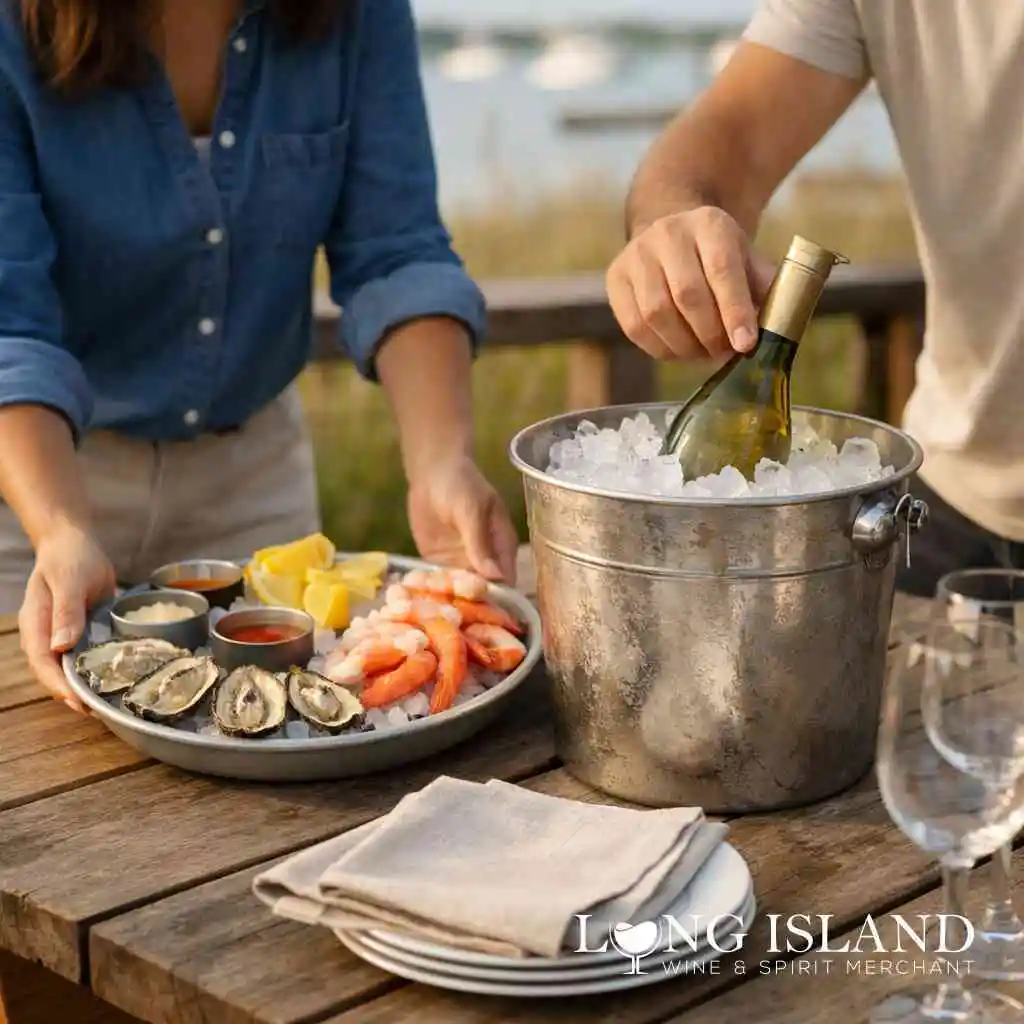
This is the lane most people overlook. They assume seafood means no red wine at all. That is too rigid. Tuna steaks, miso salmon, and even mushroom-topped seafood dishes can welcome a light red if the sauce is right. A sushi wine pairing with rosé and light reds is a practical way to cover those plates without forcing a white wine where it does not belong. If you host often, this category saves the list.
What to pour for guests who want organic wine, kosher spirits, or alcohol-free wine
Not every guest wants the same thing, and a smart menu respects that. Organic wine appeals to diners who want a cleaner farming story. Kosher spirits and wines matter for many events and family gatherings. Alcohol-free wine gives non-drinkers a real seat at the table. The mistake is treating these as side notes. They should be part of the plan from the start.
The best seafood hosts ask early. That way, you can accommodate more people without scrambling. We also see more interest in low-intervention bottles and thoughtful alternatives at weddings and corporate dinners. If that fits your crowd, look at organic wine and alcohol-free wine options and kosher spirits and wine pairings for seafood events. It keeps the menu inclusive and still polished.
What actually belongs on a seafood wine menu before the first bottle is opened
Before service starts, the menu has to work in the real world. That means inventory, storage, delivery, presentation, and compliance all matter. A beautiful pairing list fails if you overbuy, under-chill, or miss the guest experience. In Commack, Suffolk County, and across Long Island, the best wine programs think like hosts first and collectors second. That is the mindset that keeps a seafood wine menu sharp.
Which categories to stock for a polished Long Island wine selection without overbuying
You do not need twenty bottles. You need the right categories. Start with one crisp Sauvignon Blanc, one Pinot Grigio, one fuller Chardonnay, one sparkling brut, one rosé, and one flexible red. If the menu is spice-forward, add dry Riesling. If it leans Mediterranean, add Vermentino or Albariño. That small set covers most seafood service without overbuying.
The goal is control. Too much choice creates waste. Too little choice creates awkward gaps. A focused Long Island wine store with cases of wine and gift boxes helps when you need consistency for events, private dinners, or restaurant service. It also makes reorder planning much easier when guests keep asking for the same styles.
How to use wine tasting packs, gift cards, and cases of wine for events and bulk orders
Wine tasting packs are one of the smartest tools for seafood menus. They let you test pairings before committing to a full list. They also help guests compare styles side by side. Gift cards work well for clients who want to choose their own bottles later. Cases of wine make sense for weddings, corporate dinners, and party alcohol bulk orders when you need the same bottle across a room.
Here is the practical side: use tasting packs to narrow the list. Use gift cards for flexibility. Use cases when you already know the menu. That approach saves time and reduces guesswork. If you are building a larger order, wine delivery near me in Commack can be a useful option, subject to availability and compliance. For bigger hospitality needs, corporate planning stays much cleaner when the wine is selected early.
Where cocktail ingredients, mixers, vermouth selection, and amaro digestif fit alongside the wine
A seafood menu is rarely only wine. Guests want cocktails too. That means you need cocktail ingredients, mixers, vermouth selection, bitters, and sometimes an amaro digestif after dinner. A martini before the meal can frame oysters beautifully. A spritz or low-ABV cocktail can work with crab cakes. Amaro gives the end of the meal a dry, herbal finish.
This is also where mixology supplies matter. Tonic water, cocktail cherries, and simple garnishes can make a small bar feel complete. If you are serving seafood at home, a few well-chosen ingredients go farther than a crowded cart. Guests who want a classic pour can also explore a best gin for martini style or a clean vermouth setup. The point is not excess. It is precision.
What delivery, bottle engraving, and corporate gifts can do for restaurant lists and home entertaining
Delivery changes how people build menus. Instead of settling for what is nearby, you can choose what fits the seafood. Long Island alcohol store shipping and wine delivery help bring the right bottles into the room, subject to shipping rules and age checks. Bottle engraving adds a polished touch for gifts and private events. Corporate gifts make seafood dinners feel more considered without becoming flashy.
We see this often in Manhattan, Nassau, and Suffolk County orders. People want something specific, not random. They also want service to feel easy. That is why an alcohol store with delivery options, gift sets, and event support can simplify the whole process. For hosts, that means less stress and a more confident pour.
The last checklist for alcohol shipping regulations, age verification, and responsible service across Commack, Suffolk County, and statewide orders
Compliance is not a small detail. It is the structure that makes service possible. New York alcohol shipping rules, age verification, and local liquor laws all affect what can be delivered and how. Policies can vary by state, and they can change, so always confirm details before ordering. Long Island Alcohol Store follows applicable Suffolk County and New York rules, and statewide shipping depends on legal eligibility and order review.
A few practical reminders help every time:
- Confirm the delivery address and recipient age
- Keep chilled wines cold before service
- Store bottles away from heat and sunlight
- Offer water and food with every alcohol service
- Stop service when guests have had enough
That last part matters more than people admit. Responsible drinking keeps the meal pleasant and the evening safe. For shoppers comparing options from a liquor store or an online wine store USA, the smartest move is simple: choose the bottles that fit the food, verify the rules, and let the menu do the work. You do not have to figure it all out today. Start with one thoughtful bottle and build from there.
Frequently Asked Questions
Question: How can Long Island Alcohol Store help me build a seafood wine menu with Long Island wine for oysters, lobster, crab legs, and grilled fish?
Answer: Long Island Alcohol Store can help you build a seafood wine menu by matching the bottle to the dish, the sauce, and the texture of the meal. For oysters and other briny shellfish, crisp coastal wines like Sauvignon Blanc, Albariño, or sparkling brut usually work beautifully because they bring acidity and a clean mineral edge. For lobster and richer plates, unoaked Chardonnay or a fuller white can add body without overpowering the seafood. For grilled fish, Vermentino or a bright Long Island wine with citrus and herbal notes can be an excellent fit. Our goal is to make wine and food harmony feel simple, whether you are planning a home dinner, a seafood tasting menu, or a restaurant wine list. If you are comparing options at an alcohol store or liquor store, we can help point you toward styles that suit the food instead of just the label.
Question: What are the best white wine for seafood options if I want something reliable from a Long Island wine store or online wine store USA?
Answer: A few dependable choices cover most seafood menus very well. Pinot Grigio for seafood is one of the easiest starting points because it is light, fresh, and versatile. Sauvignon Blanc is a strong choice for citrus-driven plates and raw bar service. Albariño is excellent when salinity in wine pairing matters, especially with oysters, clams, and ceviche. Unoaked Chardonnay is ideal when you need a little more structure for lobster and butter-based dishes. Dry Riesling with spicy seafood is another smart lane for Thai-style seafood, chili, ginger, or sweet-heat sauces. If you are shopping through a Long Island wine store or online liquor shop, it helps to build around these styles so you have the right bottle for each part of the meal. We also recommend wine tasting packs when you want to compare pairings before buying cases of wine for an event.
Question: Can I order champagne delivery, sparkling wine with seafood, or holiday champagne for a raw bar or seafood tasting menu?
Answer: Yes, sparkling wine is one of the best partners for seafood, and it can make the whole menu feel more polished. Brut styles are especially useful for raw bar service because the bubbles refresh the palate and help briny oysters, sashimi, lobster rolls, and tempura shrimp feel even cleaner. Champagne delivery can also be a smart option for celebrations, holiday champagne service, or a seafood tasting menu where you want the first pour to feel elevated. If you are organizing wedding alcohol, corporate gifts, or party alcohol bulk orders, sparkling wine is often a strong anchor because it works across a wide range of dishes. Long Island Alcohol Store offers wine delivery and alcohol delivery options subject to applicable alcohol shipping regulations and age verification, so it is always best to confirm eligibility before ordering.
Question: Does Long Island Alcohol Store carry organic wine, kosher spirits, and alcohol-free wine for seafood events and family gatherings?
Answer: Yes, those categories can be very helpful when you are hosting a mixed group. Organic wine is a good choice for guests who prefer low-intervention farming or a cleaner sourcing story. Kosher spirits and kosher wine options can be important for family events, celebrations, and community gatherings. Alcohol-free wine gives non-drinkers a real place at the table and keeps the menu inclusive without making anyone feel left out. For seafood dinners, these options work especially well because the food itself is often fresh and elegant, so the beverage program should feel equally thoughtful. If you are planning a restaurant wine list, a home gathering, or a corporate dinner, it is worth asking about alcohol gift sets, gift cards, and bottle engraving too, since those can turn a useful order into something more memorable.
Question: What should I know before using liquor delivery near me, wine delivery, or Long Island alcohol store shipping for a seafood dinner?
Answer: The biggest things to keep in mind are age verification, responsible drinking tips, and local alcohol shipping regulations. Because rules can vary, it is always smart to confirm details before placing an order, especially if you need nationwide shipping through an online wine store USA or spirits delivery nationwide. For a seafood dinner, planning ahead also helps with chilled white wine service, champagne delivery timing, and whether you need same-day delivery or just a well-timed order in advance. Long Island Alcohol Store can be a practical resource when you want alcohol near me open now, a Commack liquor store option, or support for Suffolk County alcohol needs, but inventory and delivery eligibility should always be confirmed. If you are building a larger event order, our selection can also support cocktail ingredients, mixology supplies, vermouth selection, amaro digestif, mixers, tonic water, and non-alcoholic beverages so your seafood menu feels complete from the first pour to the last course.


